
Most conversations about epoxy floor preparation begin and end with diamond grinding. On some projects, though, the work does not stop there. After the grinder has finished, the crew makes a second, separate pass over the floor, which is commonly called sanding.
This guide explains what sanding after grinding means, how it differs from the grinding step, why a contractor might include it, and why it is not part of every epoxy installation. It builds on our guide to concrete grinding for epoxy floors, so start there if you have not read it.
Watch: Sanding After Diamond Grinding
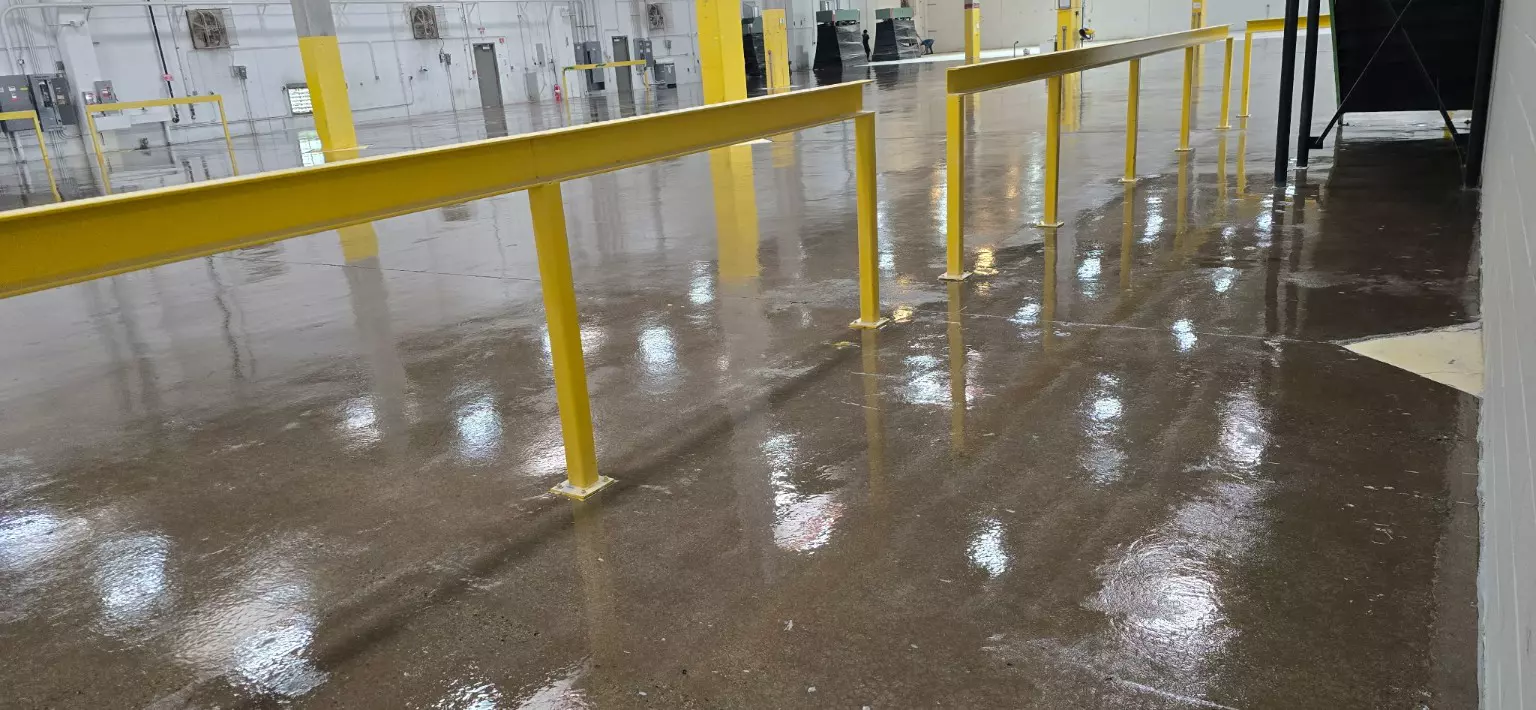
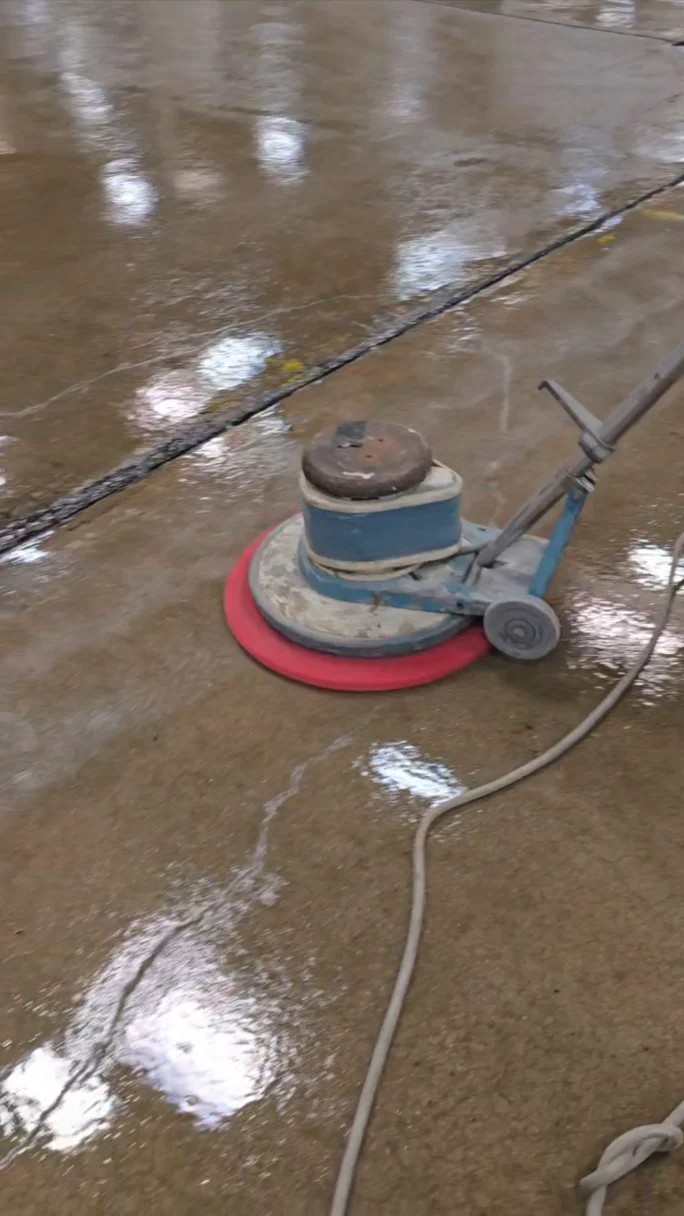
The footage shows the sanding stage of a commercial flooring project, carried out after the concrete had been diamond ground. A rotary floor machine with a round pad is worked across a large open floor.
What the video shows is that sanding followed grinding on this project. It does not tell us which abrasive or pad was used, how coarse it was, why this stage was chosen, which coating system was going on top, or what surface profile that system required. We have not confirmed those details, so this guide does not guess at them.
What Does Sanding Mean in Concrete Floor Preparation?
In floor preparation, sanding is a practical, shop-floor word for a follow-up abrasive pass made after the main grinding. It is a separate stage from grinding, done with a different machine setup, on a floor that has already been ground.
Contractors use several words for this kind of work, including sanding, refining and honing, and the words are not applied consistently from one company to the next. What matters is not the label but what the stage is specified to do on the project and what it is meant to leave behind.
Grinding vs. Sanding: How the Two Stages Differ
| Diamond grinding | Sanding after grinding | |
|---|---|---|
| Where it falls | Typically the first mechanical stage on the slab | A follow-up pass, made only on projects that include it |
| What it is used for | Removing weak surface material, some coatings and contaminants, and leaving a surface profile | Working the surface that grinding has already opened. The aim on any one job is set by the contractor and the coating system |
| Typical equipment | A walk-behind grinder with diamond tooling, usually connected to dust collection | A floor machine with an abrasive pad or tool. The exact tooling varies from project to project |
| Needed on every floor? | Many professional systems call for some mechanical preparation | No. It belongs only where the project, the slab or the coating system calls for it |
Put simply, grinding is the stage that opens up the slab, and sanding is a later stage that works on what grinding left behind. The grinding guide covers the first stage in detail, including how it differs from acid etching.
Why Contractors May Add a Sanding Stage
There is no single reason, and the right one depends on the floor. These are reasons a contractor might include a follow-up pass. Which of them applied to the project in our video has not been confirmed.
- To refine the surface texture that coarser grinding tooling leaves, where the coating system calls for a more even surface.
- To even out areas that were prepared differently, such as the edges and corners that a large machine cannot reach, or repaired areas that need to blend with the surrounding slab.
- To suit thinner or more visible finishes, where tooling marks or an uneven surface could show through the coating.
- To follow a written requirement in the coating manufacturer's instructions or in the project specification.
- To follow the contractor's established method, built from experience with the products and slabs they work with.
None of this makes sanding a universal good. It is a tool that suits some floors and some systems, and a contractor should be able to say which applies to yours.
Why Sanding Is Not Required on Every Epoxy Floor
Many professional installations go from grinding straight to repairs, cleaning and the primer, with no sanding stage at all. Whether a follow-up pass belongs on a given floor depends on the slab, the system and the finish, which is why a contractor who adds sanding on one project and skips it on the next is not being inconsistent. They may simply be responding to different concrete and different products.
Nothing in our video suggests that every grinding job should be followed by sanding, and it should not be read that way.
What Shapes the Preparation Plan
Concrete condition
Hardness, age, soundness and surface condition all affect how a slab responds to preparation. A floor with sealers, old coatings, adhesive residue, oil or weak surface concrete needs different handling from clean, sound concrete, and preparation cannot be planned until someone has inspected the slab. Grinding often exposes cracks, soft spots and old repairs that were hidden before.
Coating system
A thin-film coating and a thick, multi-layer system make different demands on the surface beneath them. Generally speaking, a thin or glossy coating shows more of what is underneath it, while a thicker system can have more tolerance for texture. The finish matters too: a broadcast flake system and a smooth solid-colour floor do not hide the same things.
Manufacturer requirements
The coating manufacturer's technical data sheet and installation instructions state the surface condition their product needs, and they take priority over general advice, including this guide. If a contractor says a step is required, a good question is where it is written down.
Desired surface profile
Surface profile is the texture a coating grips. Manufacturers often specify the profile their product needs, frequently expressed using the concrete surface profile (CSP) scale published by the International Concrete Repair Institute. The goal is the range the product calls for, not as smooth as possible and not as rough as possible.
Refining a Surface Is Not the Same as Achieving a Bond
It is tempting to assume that a smoother, more even floor must be better prepared. It is not that simple. A coating bonds to concrete that is clean, sound and prepared to the profile the system requires. Making a surface look more uniform does not by itself create any of those conditions.
For that reason, sanding does not make a coating stick better in every situation. For some systems, taking a surface smoother than the manufacturer's required profile could be inappropriate, which is why the data sheet decides and not the look of the floor.
Sanding also does not fix the other things that cause coating problems. Moisture moving through the slab, contamination, weak concrete, poor mixing and difficult installation conditions all stay on the list regardless. Our guide to why epoxy floors peel explains how those causes combine.
Preparation on Commercial and Industrial Floors
The floor in our video is a good illustration of why stages matter on large floors. A big open slab means a lot of area to prepare, more joints and repairs, tight scheduling around a working building, and heavier wear once the floor is back in service. Each additional stage adds time, equipment and cleaning, so it is worth knowing which stages are actually included.
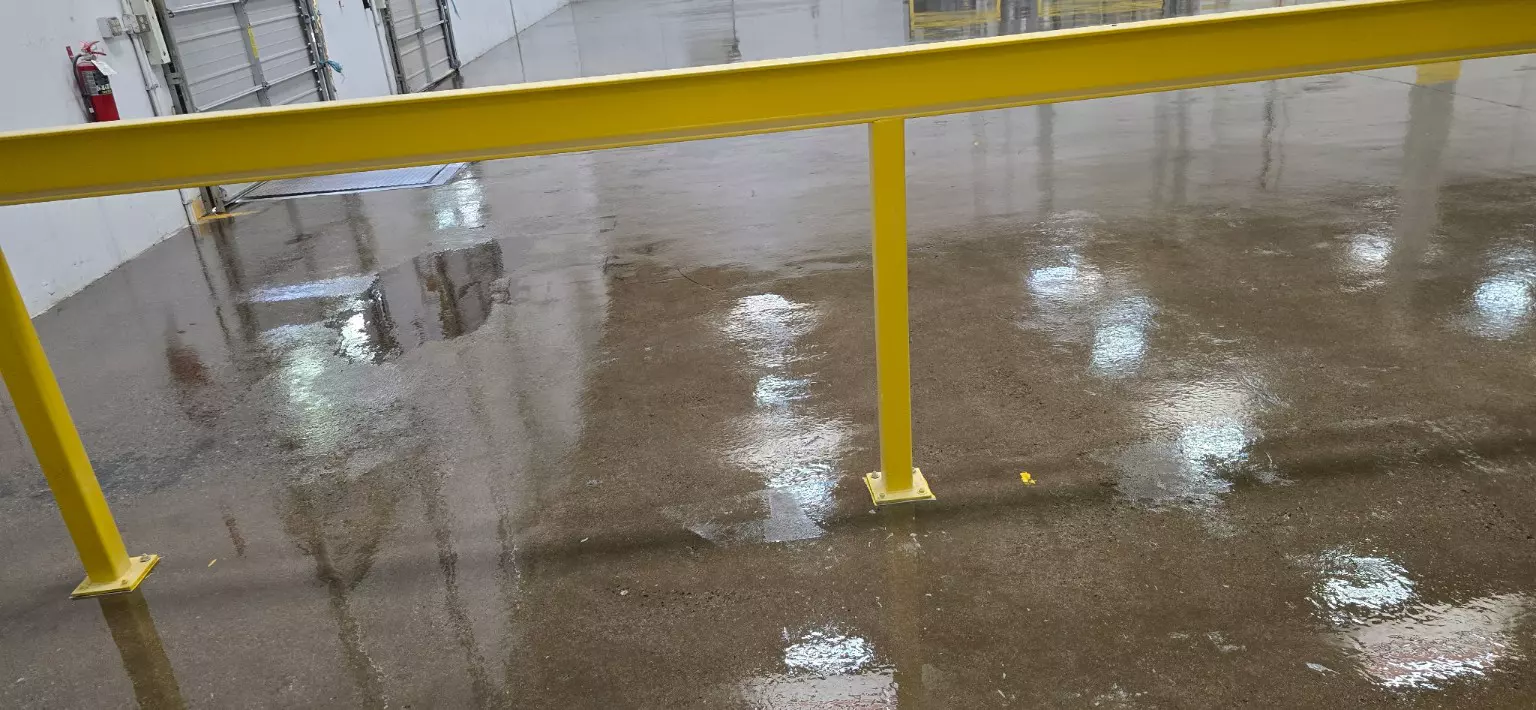
On commercial and industrial floors, a proposal should say what preparation is planned rather than describing it as surface prep. Our page on concrete preparation lists what a proposal should specify about the slab, and the concrete grinding page covers the first stage.
The same questions apply to a residential garage floor, although the scale, the equipment and the coating system are often different.
Questions to Ask Your Contractor About Surface Preparation
You do not need to know the tooling to ask good questions. Answers that are specific and tied to your floor are a good sign.
- What preparation method is planned for my floor, and why?
- Does the plan include a stage after grinding, such as sanding? If so, why does this floor need it, and if not, why not?
- What does the coating manufacturer's data sheet require for surface condition and profile?
- How will the finished surface be checked against that requirement?
- How will dust be controlled, and how will the floor be cleaned before coating?
- How will cracks, joints and damaged areas be repaired?
- How is moisture in the slab being evaluated?
- What will the written scope say about preparation, so that I can compare proposals fairly?
Frequently Asked Questions
Do you have to sand concrete after grinding before epoxy?
No. Some projects include a sanding stage after grinding and many do not. It depends on the condition of the concrete, the coating system, the manufacturer's requirements and the finish wanted.
What is the difference between grinding and sanding concrete?
Grinding is typically the first mechanical stage, using diamond tooling to remove surface material and leave a profile. Sanding, as shown in our video, is a separate follow-up pass made after grinding on projects that include it.
Can concrete be too smooth for epoxy?
A surface can fall short of the profile a coating system needs, and that includes being too smooth for it. The manufacturer's data sheet states the surface the product requires, which is why preparation should be planned around the system and not around appearance.
Does sanding make epoxy bond better?
Not automatically. A bond depends on clean, sound concrete prepared to the profile the system requires. Sanding may help meet that on some projects and be unnecessary or even unsuitable on others.
Is sanding concrete the same as polishing it?
They are not the same job. Polishing is usually a finishing process for a floor that stays uncoated, while sanding after grinding, as described here, is a stage in preparing a floor for a coating. We have not confirmed the details of the stage in our video, so we do not describe it as polishing.
Does sanding replace diamond grinding?
In the project shown, sanding followed grinding rather than replacing it. Whether a lighter method could suit a particular floor is a question for the coating manufacturer's data sheet and the contractor who has seen the slab.